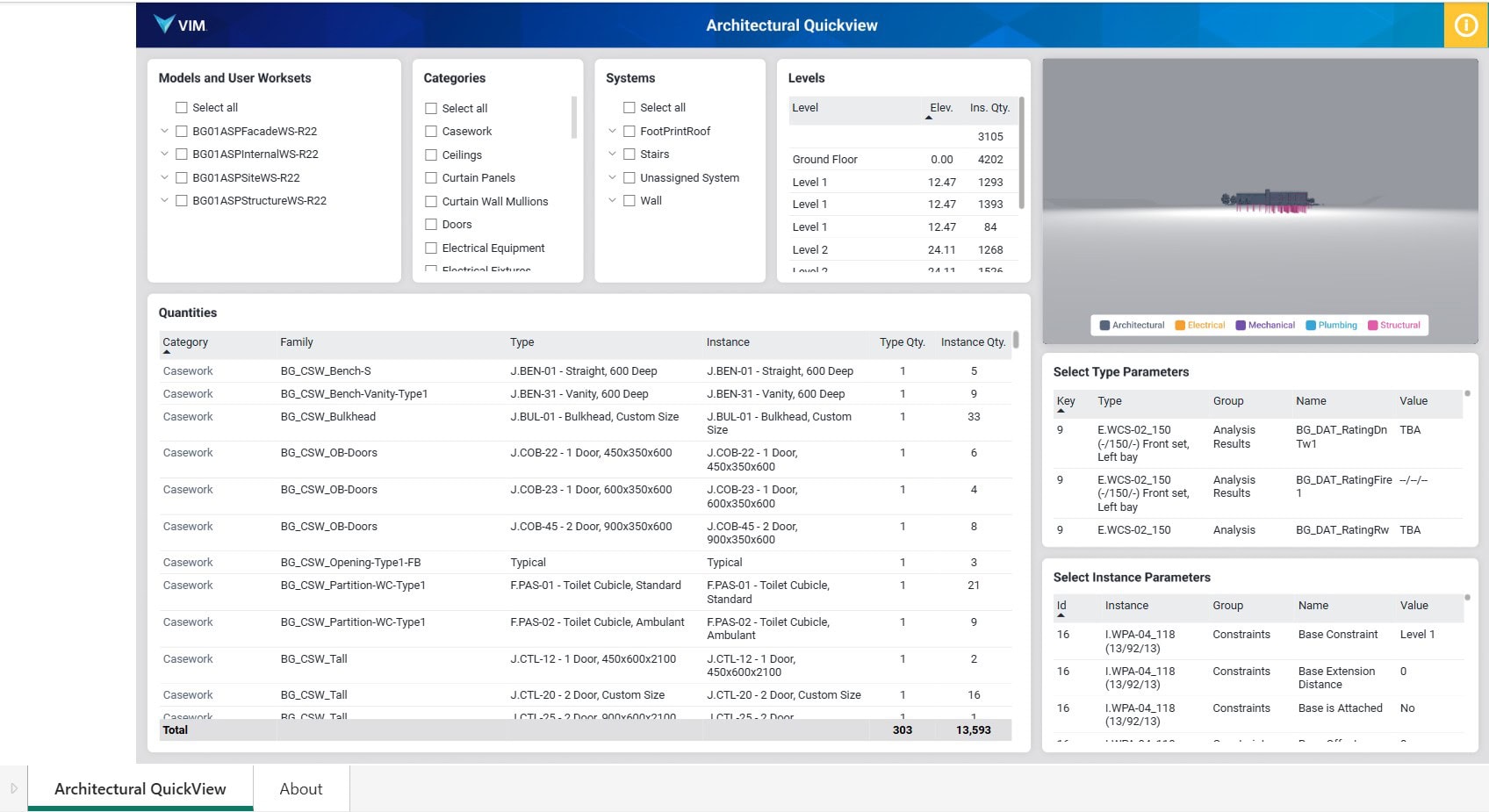
The task of interpreting data from Revit Building Information Modeling (BIM) is a challenging one. It’s further complicated by the need to create a universal model that can adapt to projects of all sizes, from small-scale construction to massive government initiatives with millions of parameters and elements. Moreover, this data is often unstructured and hard to make sense of. To conquer these hurdles, VIM AEC partnered with Alphabyte, to develop a state-of-the-art data model.
An Engineering Problem
Engineers face several challenges when working with their BIM data, including the following questions:
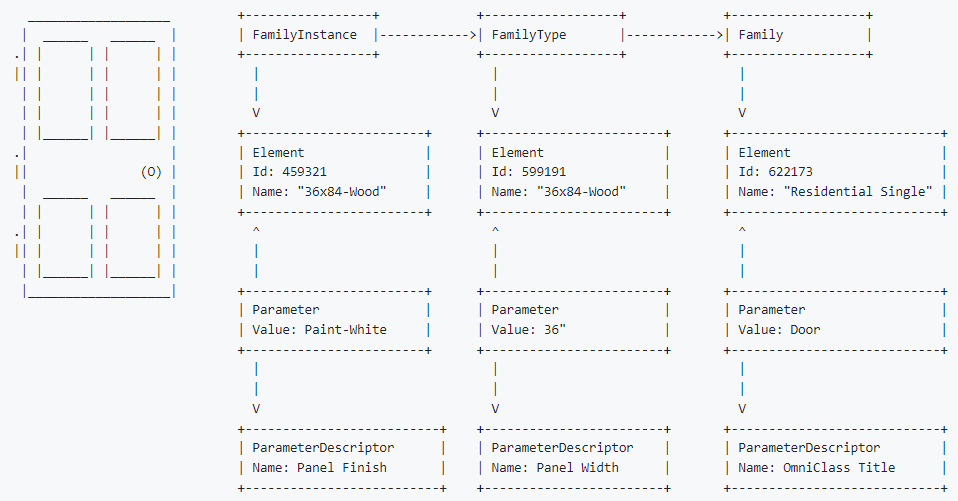
Parameter Analysis: How can elements and parameters be analyzed across multiple interconnected hierarchy levels, including Instances, Family Types, and Families?
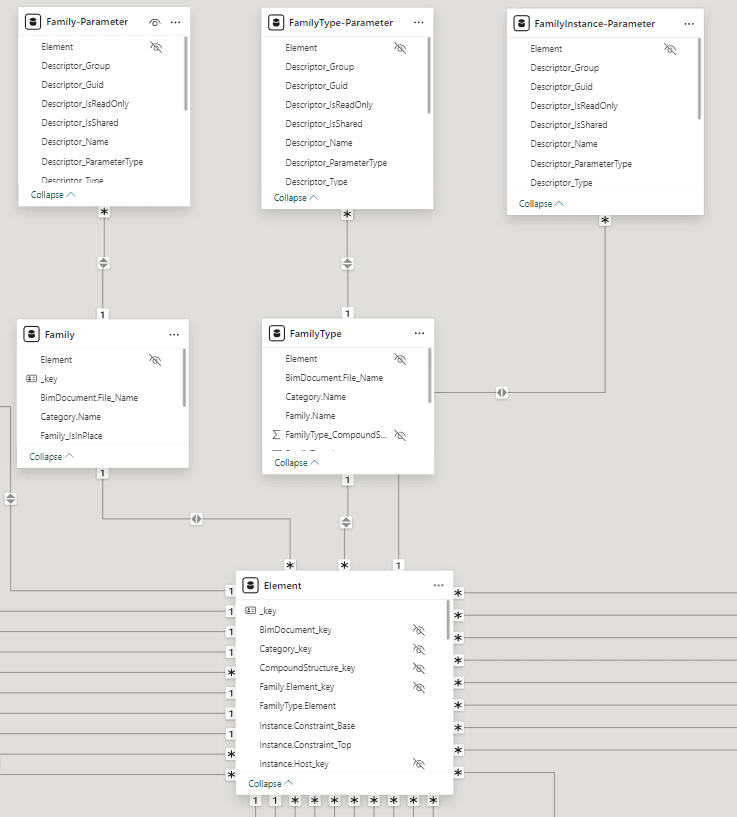
Data Modeling: How can data be effectively modeled for projects with millions of parameters and elements?
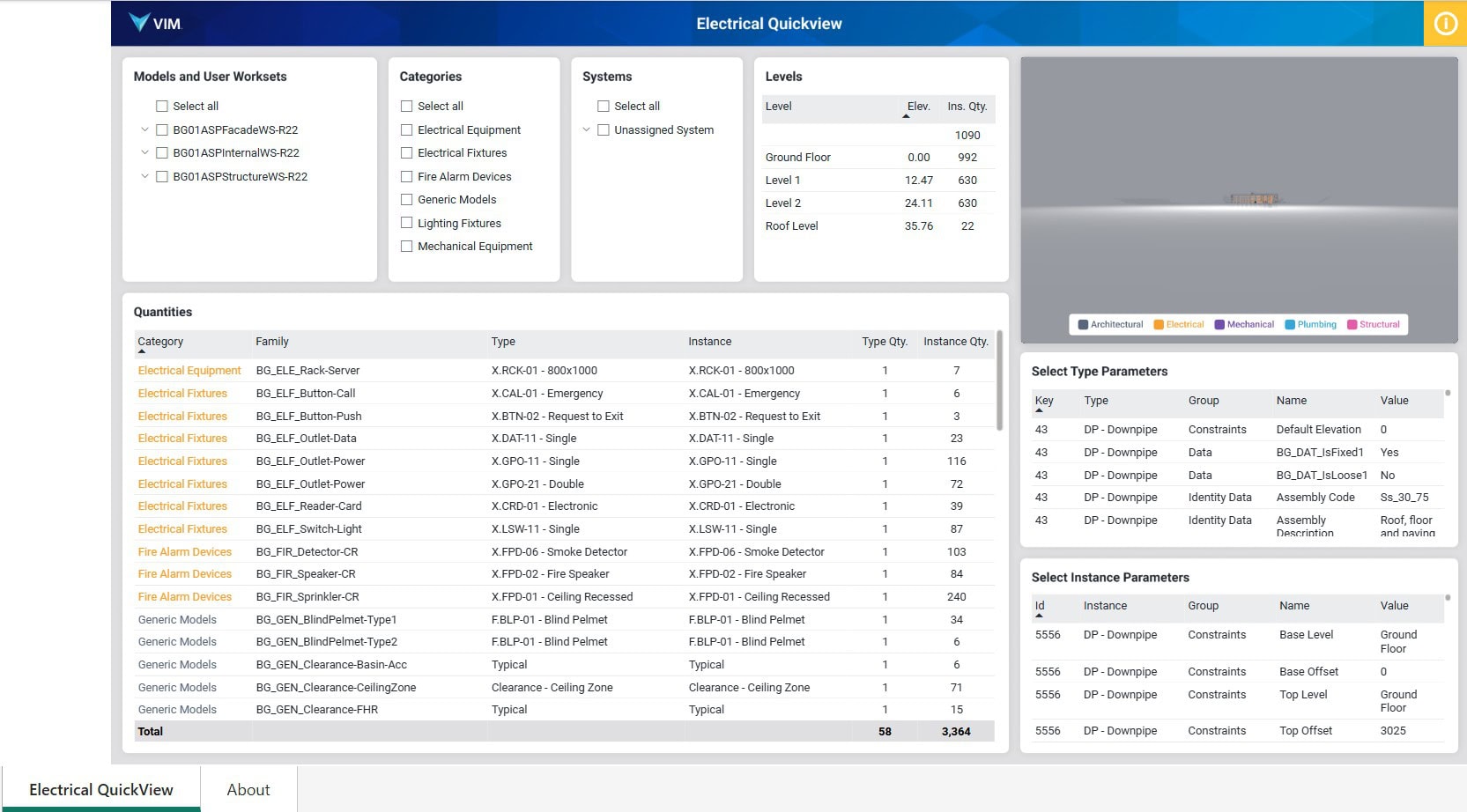
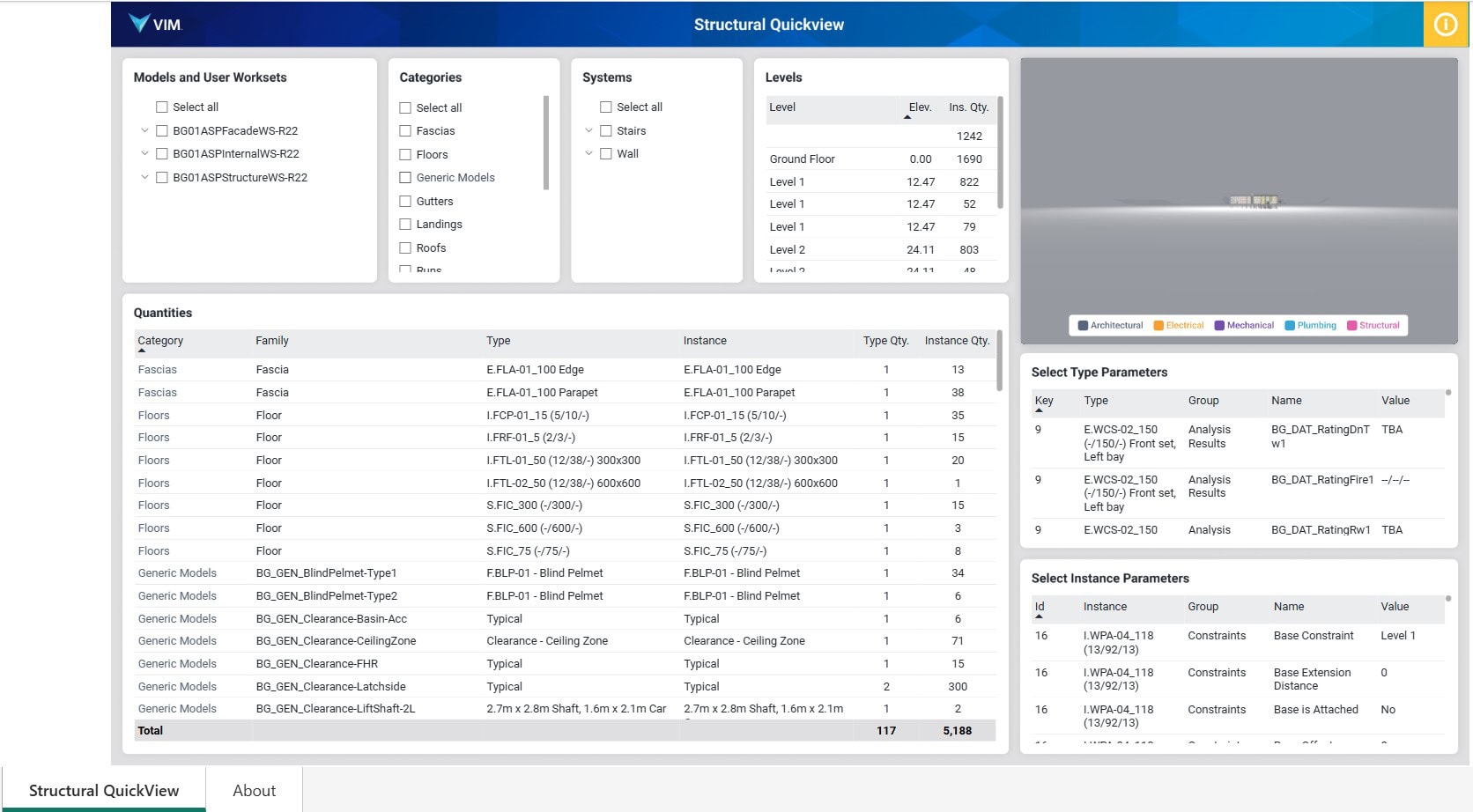
Technical Analysis: How can data be modelled in a way that can answer technical scenarios such as the following:
- Identifying steel beams with a yield strength over 50 KSI in the basement.
- Identifying concrete slabs less than 6 inches thick.
- Finding rooms on the third floor with an area less than 100 square feet.
- Identifying windows larger than 20 square feet facing south.
- Determining electrical panels on the second floor serving loads over 200 amps.
- Finding circuits with a voltage drop greater than 5%.
These complex challenges required a sophisticated data model capable of navigating interrelated data hierarchies and relationships.